Introduction
Most people associate cataracts with older adults, but cataracts can develop in young adults as well, sometimes even as early as the 20s or 30s. With changing lifestyle habits, increasing screen usage, and medical conditions like diabetes becoming more common, doctors are seeing more cases of early-onset cataract than ever before.
Cataracts in young adults can be particularly challenging because this age group is usually active, working, and often dependent on clear vision for careers, studies, and travel. The good news is that cataract is completely treatable, and modern procedures offer safe, fast, and effective results.
This article explains the causes, symptoms, diagnosis, and treatment options for cataracts in young adults.
What Is a Cataract?
A cataract is the clouding of the natural lens inside the eye. The lens normally focuses light onto the retina, helping us see clearly. When this lens becomes cloudy due to protein changes, the vision becomes blurry or foggy.
Though cataracts typically develop with age, certain factors can cause them at a younger age.
Causes of Cataracts in Young Adults
Several reasons can trigger cataracts in individuals below 45 years. The most common are:
1. Genetic Predisposition
Family history plays a major role. If parents or grandparents had cataracts at a young age, the chances are higher for the next generation to develop them early.
2. Diabetes and Metabolic Disorders
Uncontrolled diabetes speeds up changes in the lens. Young adults with diabetes often develop cataracts earlier, and the progression can be rapid.
3. Excessive UV Exposure
Frequent exposure to sunlight without UV-protected sunglasses increases lens damage over time. Outdoor professionals and travellers face higher risk.
4. Long-term Steroid Use
Continuous use of steroid medications—including tablets, inhalers, skin creams, and eye drops—can lead to steroid-induced cataracts.
5. Eye Trauma
Accidents, sports injuries, or even a heavy blow to the eye can cause traumatic cataracts. Sometimes the cataract forms immediately; other times it appears after months or years.
6. Lifestyle Factors
Smoking, alcohol consumption, and poor nutrition can speed up early lens degeneration. Today’s digital lifestyle—constant screen time and eye strain—also adds oxidative stress to the eyes.
7. Congenital and Developmental Causes
Some people are born with mild cataracts that become noticeable only later in life. Others may develop cataracts due to infections during childhood.
8. Radiation Exposure
People working with radiation equipment or undergoing radiation therapy have higher chances of developing cataracts at a younger age.
Symptoms of Cataract in Young Adults
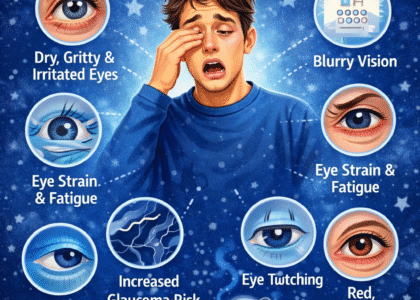
Cataracts in young people may go unnoticed for months. Early signs include:
- Blurred or cloudy vision
- Trouble seeing in low light
- Sensitivity to bright lights
- Halos around light sources
- Frequent changes in glasses power
- Difficulty reading or using digital devices
- Faded colours
- Night driving becoming difficult
If you notice any of these symptoms, book an eye checkup immediately.
Diagnosis of Cataract
An eye specialist uses several tests to diagnose a cataract and determine its severity:
1. Visual Acuity Test
Checks clarity of vision using a letter chart.
2. Slit Lamp Examination
Allows the doctor to view the natural lens closely to spot clouding.
3. Dilated Eye Examination
Eye drops widen the pupil so the doctor can examine the lens and retina thoroughly.
4. Eye Pressure Test (Tonometry)
Rules out associated conditions like glaucoma.
5. Additional Scans (if required)
- Eye ultrasound
- Retina scan
- Biometry to plan surgery
These tests help determine whether cataract surgery is needed and what approach is best.
Can Cataracts Be Treated with Medicine?
No.
There are no medicines, eye drops, or exercises that can reverse a cataract. Glasses may help for a short time, but once the lens becomes cloudy, the only permanent solution is cataract surgery.
Treatment Options for Young Adults
Thanks to advanced medical technology, cataract treatment today is safe, fast, and highly accurate. Surgery is the only definitive treatment, but modern techniques are painless and offer quick recovery.
Here are the most common surgical methods used for young adults:
1. Blade-free Laser Cataract Surgery (Femtosecond Laser)
This is the most advanced cataract surgery technique available today.
How It Works
A computer-guided laser performs:
- The corneal incision
- Fragmentation of the cataract
- Precise preparation for lens replacement
No blade is used, making the process safer and more predictable.
Benefits
- 100% blade-free
- Very high precision
- Quick and painless
- Minimal discomfort
- Faster healing
- Better visual outcomes
Because young adults require high-quality vision for work and daily activities, laser cataract surgery is often the preferred choice.
2. Micro-Incision Cataract Surgery (MICS)
This technique uses a very tiny corneal incision (around 1.8–2.2 mm).
It reduces trauma to the eye and ensures a faster recovery.
Benefits
- Smaller incision
- Lesser risk of complications
- Quicker healing
- Minimal post-operative discomfort
3. Phacoemulsification (Ultrasound Cataract Surgery)
This is the most commonly used technique worldwide.
Ultrasound waves break the cloudy lens into tiny pieces, which are then removed.
Benefits
- Safe, time-tested method
- Quick procedure
- Minimal downtime
This surgery is highly effective and suitable for most cataract cases.
Recovery After Cataract Surgery
Young adults typically heal faster than older patients. Most people notice clearer vision within 24 to 48 hours, and full recovery happens within a few weeks.
Typical Recovery Timeline
Day 1–2: Vision becomes clearer.
Day 3–5: Most daily activities can be resumed.
After 1 Week: Office work, screen use, and mild physical activity are safe.
After 2–3 Weeks: Travel and outdoor activities allowed.
After 1 Month: Complete healing is expected.
Post-Surgery Care
- Use prescribed eye drops as directed
- Avoid rubbing or pressing the eye
- Wear sunglasses outdoors
- Avoid swimming and dusty areas for 2–3 weeks
- Do not lift heavy weights for at least 1 week
- Attend all follow-up visits
Proper care ensures smooth healing and excellent visual outcomes.
Is Cataract Surgery Safe for Young Adults?
Absolutely.
Cataract surgery is one of the safest eye procedures with a very high success rate. Complications are rare, and most people achieve excellent vision after the surgery.
Doctors advise younger patients not to delay surgery because:
- Cataracts in young adults progress faster
- Vision can worsen suddenly
- Delayed treatment can affect work and lifestyle
- Advanced cataracts are more difficult to remove
Early treatment ensures better clarity and long-term eye health.
How to Prevent Cataracts at a Young Age
Although not all cataracts are preventable, adopting healthy habits can delay early lens damage:
✔ Protect your eyes with UV-blocking sunglasses
✔ Control diabetes and other health conditions
✔ Quit smoking and reduce alcohol consumption
✔ Limit steroid use unless prescribed
✔ Follow a balanced diet rich in antioxidants
✔ Take regular breaks from screens
✔ Schedule eye checkups every year
Conclusion
Cataracts in young adults are increasingly common due to lifestyle changes, medical conditions, and environmental factors. However, modern cataract treatments—especially laser and micro-incision surgeries—make it possible to restore clear vision safely and quickly. If you experience symptoms like blurred vision, halos around lights, or difficulty driving at night, consult an eye specialist early.
Timely diagnosis and treatment will help you regain sharp, comfortable, and confident vision, allowing you to continue your active lifestyle without interruption.