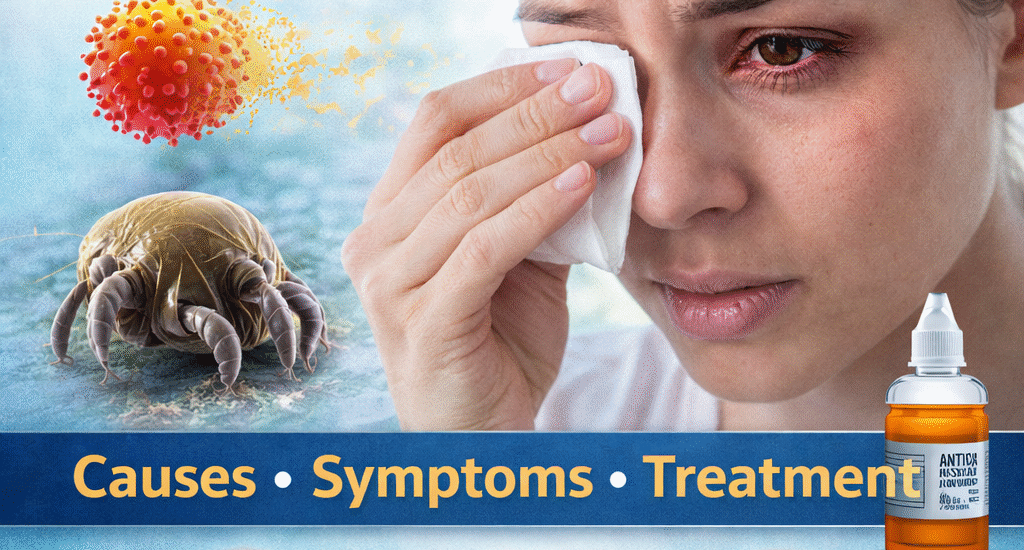
Eye allergies are a common condition that affects people of all ages. They occur when the eyes react to substances that trigger an allergic response. These substances, known as allergens, can cause irritation, redness, itching, and watering of the eyes. Although eye allergies are usually not serious, they can cause significant discomfort and affect daily activities if not properly treated.
Understanding the causes, symptoms, and treatment of eye allergies can help individuals manage the condition effectively and protect their eye health.
What is an Eye Allergy?
An eye allergy, also known as allergic conjunctivitis, occurs when the conjunctiva (the thin membrane covering the white part of the eye and the inner eyelid) becomes inflamed due to exposure to allergens.
When the eyes come into contact with allergens, the body’s immune system reacts by releasing chemicals called histamines. These histamines cause the blood vessels in the eyes to swell and lead to common allergy symptoms such as itching and redness.
Eye allergies often occur alongside other allergic conditions such as hay fever, sinus allergies, or skin allergies.
Common Causes of Eye Allergies
Eye allergies are usually triggered by substances in the environment. Some of the most common causes include:
1. Dust
Dust particles are one of the most frequent causes of eye allergies. Dust can easily enter the eyes, especially in polluted or construction-heavy areas.
2. Pollen
Pollen from trees, grasses, and flowers is a major trigger for seasonal eye allergies. Many people experience eye irritation during certain seasons when pollen levels are high.
3. Pet Dander
Tiny flakes of skin from pets such as cats and dogs can trigger allergic reactions in sensitive individuals.
4. Smoke and Air Pollution
Smoke from cigarettes, vehicles, and industrial pollution can irritate the eyes and worsen allergy symptoms.
5. Cosmetics and Eye Products
Certain eye makeup products, creams, or contact lens solutions may cause allergic reactions in some people.
6. Mold
Mold spores present in damp areas of homes or buildings can also trigger eye allergies.
Symptoms of Eye Allergies
Eye allergy symptoms can vary from mild to severe depending on the individual and the allergen involved.
Common symptoms include:
- Itchy eyes
- Redness in the eyes
- Watery eyes
- Burning sensation
- Swelling of eyelids
- Sensitivity to light
- Mucus discharge from the eyes
In many cases, eye allergies affect both eyes simultaneously.
People with eye allergies may also experience additional symptoms such as sneezing, nasal congestion, or a runny nose.
Types of Eye Allergies
There are different types of allergic eye conditions depending on the cause and duration.
Seasonal Allergic Conjunctivitis
This is the most common type of eye allergy and occurs during specific seasons when pollen levels are high.
Perennial Allergic Conjunctivitis
This type occurs throughout the year and is often caused by indoor allergens such as dust mites, pet dander, or mold.
Contact Allergic Conjunctivitis
This happens when the eyes react to cosmetics, eye drops, or contact lenses.
Giant Papillary Conjunctivitis
This condition may develop in people who wear contact lenses for long periods.
How Eye Allergies Are Diagnosed
An eye doctor can diagnose eye allergies through a detailed eye examination and medical history review.
The doctor may ask questions about:
- Recent exposure to allergens
- Family history of allergies
- Use of contact lenses or cosmetics
- Frequency and duration of symptoms
In some cases, additional allergy tests may be recommended to identify the specific trigger.
Early diagnosis helps in choosing the right treatment and preventing complications.
Treatment Options for Eye Allergies
The treatment for eye allergies focuses on relieving symptoms and avoiding the allergens that trigger the reaction.
1. Avoiding Allergens
The most effective way to manage eye allergies is to reduce exposure to allergens. Some preventive measures include:
- Keeping windows closed during high pollen seasons
- Using air purifiers indoors
- Avoiding dusty environments
- Washing hands frequently
- Cleaning bedsheets and pillows regularly
2. Artificial Tears
Lubricating eye drops can help wash away allergens and soothe irritated eyes.
3. Antihistamine Eye Drops
Doctors may prescribe antihistamine eye drops to reduce itching, redness, and swelling.
4. Anti-inflammatory Medications
Certain medications help reduce inflammation in the eyes and provide relief from allergy symptoms.
5. Cold Compress
Applying a cold compress on closed eyes can reduce swelling and irritation.
6. Allergy Medications
In some cases, oral antihistamines may be recommended to control overall allergic reactions.
Home Care Tips for Eye Allergies
People suffering from eye allergies can follow simple home remedies to reduce discomfort.
These small precautions can significantly reduce allergy symptoms.
- Avoid rubbing the eyes as it can worsen the symptoms
- Wash the eyes gently with clean water
- Use sunglasses outdoors to protect from dust and pollen
- Maintain good eye hygiene
- Avoid sharing eye makeup or towels
When to See an Eye Doctor
While mild eye allergies can be managed with basic care, it is important to consult an eye specialist if:
- Symptoms persist for several days
- Vision becomes blurred
- Severe redness or swelling occurs
- Eye pain develops
- Over-the-counter medications do not provide relief
Professional medical advice ensures proper treatment and prevents complications.
Preventing Eye Allergies
Although it may not always be possible to completely avoid allergens, certain steps can reduce the risk of eye allergies.
- Keep your home clean and dust-free
- Use protective eyewear in dusty environments
- Avoid exposure to cigarette smoke
- Limit outdoor activities during high pollen days
- Maintain proper eye hygiene
Regular eye checkups also help in maintaining healthy vision and detecting any issues early.
Conclusion
Eye allergies are a common condition that can cause irritation and discomfort if left untreated. They are usually triggered by environmental allergens such as dust, pollen, smoke, or pet dander. Symptoms like itching, redness, watering, and swelling of the eyes can affect daily life and productivity.
Fortunately, eye allergies can be effectively managed through proper diagnosis, avoiding allergens, and using appropriate medications. With timely treatment and good eye care habits, most people can control their symptoms and maintain healthy eyes.
If you frequently experience eye allergy symptoms, consulting an experienced eye specialist can help identify the cause and provide the right treatment for long-term relief.