Introduction
How to Protect Your Eyes While Traveling is something every traveler should know before setting off on a journey. Whether you’re traveling by air, road, rail, or sea, your eyes are exposed to changing environments such as bright sunlight, dust, pollution, dry air, and long hours of screen time. Without proper eye care, these factors can lead to dryness, irritation, eye strain, or even infections. By following a few simple precautions, you can protect your eyes while traveling and enjoy every trip with clear, comfortable vision.
How to Protect Your Eyes While Traveling
Travel exposes your eyes to conditions that are different from your daily environment. Some common factors include:
- Dry cabin air during flights
- Bright sunlight and harmful UV rays
- Dust and pollution
- Wind exposure
- Chlorinated swimming pools
- Saltwater from beaches
- Long hours of driving
- Excessive screen time
- Lack of sleep
- Dehydration
These factors can cause temporary discomfort or increase the risk of eye infections if proper precautions are not taken.
Common Eye Problems Travelers Experience
Before learning how to protect your eyes, it’s important to understand the issues that commonly occur during travel.
Dry Eyes
Dry eyes are one of the most common travel-related complaints. Airplane cabins have extremely low humidity, causing tears to evaporate quickly. Air-conditioned buses, trains, and hotels can also contribute to dryness.
Symptoms include:
- Burning sensation
- Redness
- Scratchy feeling
- Blurred vision
- Eye fatigue
Eye Allergies
Different destinations expose you to new plants, pollen, dust, and environmental allergens.
Symptoms include:
- Itching
- Watering
- Swollen eyelids
- Red eyes
Eye Infections
Travel increases your chances of touching your eyes with unclean hands. Sharing towels, using contaminated swimming pools, or wearing contact lenses improperly can also lead to infections such as conjunctivitis.
UV Damage
Many travelers underestimate the impact of ultraviolet (UV) rays. UV exposure is higher at:
- Beaches
- Mountains
- Snow-covered destinations
Prolonged exposure may increase the risk of cataracts and other eye conditions over time.
Digital Eye Strain
Long journeys often mean spending hours on:
- Smartphones
- Tablets
- Laptops
- Entertainment screens
Extended screen time can cause eye strain, headaches, blurred vision, and dry eyes.
1. Wear UV-Protective Sunglasses
One of the simplest ways to protect your eyes is by wearing quality sunglasses.
Choose sunglasses that:
- Block 99–100% UVA and UVB rays
- Have large or wraparound frames
- Fit comfortably
- Reduce glare
Sunglasses protect your eyes from harmful sunlight, wind, dust, and flying debris.
Remember that UV rays can damage your eyes even on cloudy days.
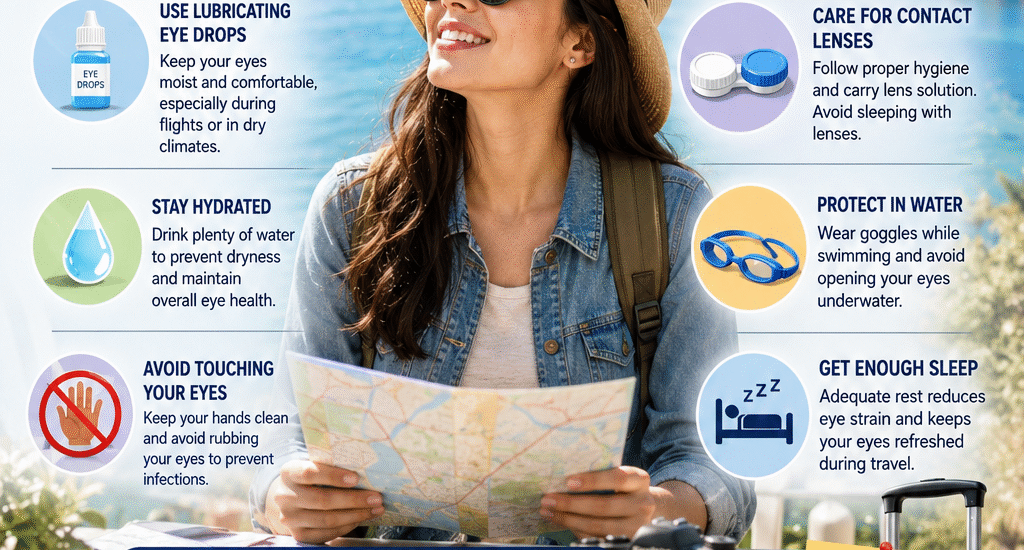
2. Carry Lubricating Eye Drops
Artificial tears are an excellent travel companion.
They help relieve:
- Dryness
- Irritation
- Burning sensation
- Eye fatigue
If you’re flying or visiting dry climates, lubricating eye drops can provide quick relief.
Always choose preservative-free eye drops if you need frequent use, and consult your eye doctor before travel if you have chronic dry eyes.
3. Stay Hydrated
Dehydration affects your entire body, including your eyes.
Drink plenty of water throughout your journey.
Proper hydration:
- Maintains tear production
- Prevents dry eyes
- Reduces eye fatigue
- Supports overall eye health
Limit excessive caffeine and alcohol, as both contribute to dehydration.
4. Avoid Touching Your Eyes
Travel involves touching luggage, public transport handles, railings, and other surfaces that may carry germs.
Avoid rubbing your eyes with unwashed hands.
Always:
- Wash hands frequently
- Carry hand sanitizer
- Use clean tissues if needed
This simple habit greatly reduces the risk of eye infections.
5. Follow Proper Contact Lens Hygiene
If you wear contact lenses, extra care is necessary while traveling.
Always:
- Wash hands before handling lenses
- Carry lens solution
- Replace lenses as recommended
- Avoid sleeping with lenses unless prescribed
- Never rinse lenses with tap water
If your eyes become irritated, switch to glasses until the discomfort resolves.
6. Protect Your Eyes While Flying
Airplane cabins have humidity levels much lower than normal environments.
To reduce dryness:
- Blink more frequently
- Stay hydrated
- Use artificial tears
- Limit contact lens wear during long flights
- Sleep when possible
Avoid directing the overhead air vent directly toward your face.
7. Take Breaks During Long Drives
Driving for several hours can cause eye fatigue.
Every two hours:
- Stop for a short break
- Stretch your body
- Look at distant objects
- Relax your eye muscles
Clean your windshield regularly to improve visibility and reduce glare.
8. Use the 20-20-20 Rule
If you’re using digital devices during travel, follow the famous 20-20-20 Rule.
Every 20 minutes:
- Look at something 20 feet away
- For at least 20 seconds
This helps reduce digital eye strain and encourages normal blinking.
9. Wear Protective Eyewear During Adventure Activities
Adventure sports often expose your eyes to dust, water, or flying particles.
Wear protective goggles during:
- Cycling
- Hiking
- Skiing
- Water sports
- Desert safaris
Safety eyewear helps prevent accidental eye injuries.
10. Be Careful Around Swimming Pools and Beaches
Swimming pools contain chlorine, while seawater contains salt and microorganisms.
To protect your eyes:
- Wear swimming goggles
- Avoid opening your eyes underwater
- Rinse your eyes with clean water afterward
- Remove contact lenses before swimming whenever possible
This reduces irritation and infection risk.
11. Pack an Eye Care Travel Kit
A small eye care kit can save you from discomfort during your trip.
Include:
- Artificial tears
- Sunglasses
- Prescription glasses
- Contact lens solution
- Extra contact lenses
- Cleaning cloth
- Protective case
- Hand sanitizer
- Eye medications (if prescribed)
Being prepared helps you handle minor eye issues immediately.
12. Get Enough Sleep
Travel often disrupts your normal sleep schedule.
Lack of sleep may cause:
- Red eyes
- Dry eyes
- Eye twitching
- Blurred vision
- Eye strain
Aim for at least 7–8 hours of sleep, especially during longer trips.
13. Eat Foods That Support Eye Health
Healthy eating doesn’t stop during vacations.
Include foods rich in:
- Vitamin A
- Vitamin C
- Vitamin E
- Zinc
- Omega-3 fatty acids
Choose foods like:
- Carrots
- Spinach
- Citrus fruits
- Fish
- Eggs
- Nuts
- Seeds
These nutrients help maintain healthy vision.
14. Protect Children’s Eyes While Traveling
Children are often more vulnerable to environmental factors.
Ensure they:
- Wear sunglasses outdoors
- Stay hydrated
- Limit screen time
- Wear hats in bright sunlight
- Avoid rubbing their eyes
Parents should also carry children’s prescribed glasses if needed.
15. Know When to Visit an Eye Doctor
Some symptoms should never be ignored during travel.
Seek immediate medical attention if you experience:
- Sudden vision loss
- Severe eye pain
- Eye injury
- Chemical exposure
- Persistent redness
- Excessive discharge
- Flashes of light
- New floaters
- Double vision
Prompt treatment can prevent permanent vision damage.
Eye Care Tips for Different Travel Destinations
Beach Vacations
- Wear UV-protective sunglasses.
- Use a wide-brimmed hat.
- Rinse eyes after swimming.
- Stay hydrated.
Mountain Trips
- Wear sunglasses because UV exposure increases with altitude.
- Protect eyes from cold winds.
- Use lubricating eye drops if needed.
Desert Travel
- Wear wraparound sunglasses.
- Protect eyes from dust and sand.
- Avoid rubbing your eyes.
City Travel
- Protect against pollution.
- Wash your face and eyes after returning indoors.
- Limit screen time during long commutes.
Conclusion
Travel should leave you with beautiful memories—not eye problems. Whether you’re flying across the world, enjoying a road trip, relaxing at the beach, or exploring the mountains, your eyes deserve the same attention as the rest of your health.
Simple habits such as wearing UV-protective sunglasses, staying hydrated, practicing good contact lens hygiene, reducing screen time, and carrying lubricating eye drops can go a long way in protecting your vision.
If you experience persistent eye discomfort, pain, blurred vision, or redness during or after your trip, don’t ignore the symptoms. A timely consultation with an eye specialist can help identify the cause and ensure your eyes remain healthy.
Protect your eyes wherever your journey takes you—because every great adventure deserves clear, healthy vision.