Introduction
Back-to-school eye checkups are one of the most important steps parents can take before a new academic year begins. As parents prepare their children for a new school year, they often focus on buying uniforms, books, and school supplies. However, one important item that should be on every back-to-school checklist is an eye examination.
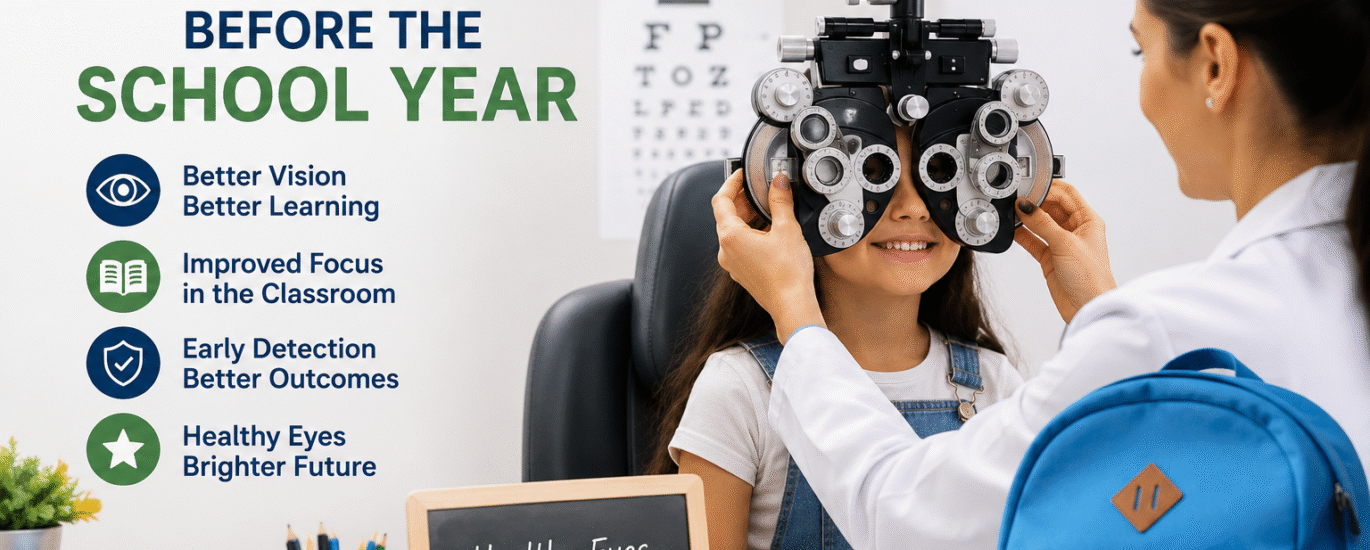
Good vision is essential for learning. Children use their eyes throughout the school day to read, write, view classroom boards, use computers, and participate in activities. Undiagnosed vision problems can affect academic performance, concentration, confidence, and overall development. A comprehensive eye checkup before school starts can help identify issues early and ensure your child is ready for a successful year.
Why Eye Checkups Are Important Before School
Many parents assume that if their child does not complain about vision problems, their eyesight is fine. However, children often do not realize they have difficulty seeing because they think everyone sees the same way.
Vision problems can develop gradually and may go unnoticed until they begin affecting school performance. Regular eye examinations help detect these issues early, allowing for timely treatment and better outcomes.
An eye checkup before the school year helps ensure your child can see clearly in the classroom, stay focused on lessons, and perform their best academically.
Common Vision Problems in Children
Several eye conditions can affect school-aged children:
Nearsightedness (Myopia)
Children with myopia can see nearby objects clearly but have difficulty seeing distant objects, such as the classroom board.
Common signs include:
- Squinting
- Sitting close to screens
- Complaints of blurry distance vision
Farsightedness (Hyperopia)
Children with farsightedness may struggle with reading and other close-up tasks.
Symptoms may include:
- Eye strain
- Headaches
- Difficulty concentrating
Astigmatism
Astigmatism causes blurred or distorted vision at various distances.
Common symptoms include:
- Frequent eye rubbing
- Blurred vision
- Headaches
Lazy Eye and Eye Misalignment
Conditions such as amblyopia (lazy eye) and strabismus (crossed eyes) can affect visual development if not treated early.
How Vision Affects Learning
Experts estimate that a large portion of classroom learning is visual. Children depend on clear vision to:
- Read textbooks
- Write notes
- See the board
- Complete assignments
- Use digital devices
When vision is compromised, children may struggle to keep up with lessons. Some may appear inattentive or uninterested in school when the real issue is that they cannot see clearly.
Correcting vision problems can significantly improve learning ability, classroom participation, and confidence.
Why Back-to-School Eye Checkups Matter
Parents should watch for symptoms that may indicate a vision problem:
Physical Signs
- Frequent headaches
- Eye rubbing
- Excessive blinking
- Watery eyes
- Squinting
Learning-Related Signs
- Difficulty concentrating
- Poor reading performance
- Declining grades
- Avoiding homework
Visual Signs
- Sitting very close to the television
- Holding books too close
- Trouble seeing distant objects
- Tilting the head while reading
If your child experiences any of these symptoms, schedule a comprehensive eye examination as soon as possible.
Benefits of Back-to-School Eye Checkups
Early Detection of Vision Problems
Eye exams can identify issues before they begin affecting learning and development. Early diagnosis often leads to more effective treatment.
Better Academic Performance
Children who can see clearly are more likely to:
- Read comfortably
- Stay focused in class
- Participate actively
- Perform better academically
Improved Confidence
Children who struggle to see may become frustrated or embarrassed. Correcting vision problems can improve self-esteem and classroom confidence.
Better Sports Performance
Good vision is important for hand-eye coordination, depth perception, and reaction time. Eye exams help ensure children can perform safely and effectively in sports and physical activities.
Reduced Digital Eye Strain
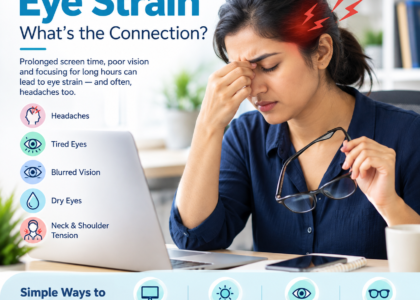
Today’s students spend significant time on computers, tablets, and smartphones. Eye exams can help identify vision issues that contribute to digital eye strain and provide recommendations for healthy screen habits.
What Happens During an Eye Examination?
A comprehensive children’s eye exam is simple and painless.
The examination typically includes:
- Vision testing
- Eye alignment assessment
- Prescription evaluation
- Eye health examination
- Depth perception testing
These tests help determine whether your child needs glasses or additional treatment.
School Screenings vs Comprehensive Eye Exams
Many schools conduct basic vision screenings, but these should not replace a complete eye examination.
School screenings may not detect:
- Focusing problems
- Eye coordination issues
- Early eye diseases
- Mild prescription changes
A comprehensive eye exam provides a much more detailed evaluation of your child’s vision and eye health.
Tips for Healthy Vision During the School Year
Parents can help protect their child’s eyesight by encouraging healthy habits:
Follow the 20-20-20 Rule
Every 20 minutes, look at something 20 feet away for 20 seconds.
Encourage Outdoor Activities
Outdoor play may help reduce the risk of myopia progression in children.
Limit Excessive Screen Time
Balancing screen use with other activities helps reduce eye strain.
Provide Healthy Nutrition
Foods rich in vitamins and antioxidants support eye health. Include:
- Carrots
- Leafy green vegetables
- Eggs
- Fish
- Citrus fruits
Ensure Proper Lighting
Good lighting during reading and homework helps reduce eye strain and improve comfort.
Conclusion
A new school year is the perfect time to prioritize your child’s eye health. Clear vision plays a vital role in learning, academic performance, confidence, and overall development.
Many vision problems can go unnoticed without a professional eye examination. By scheduling a comprehensive eye checkup before school starts, parents can help ensure their children have the visual tools they need to succeed both inside and outside the classroom.
Investing in your child’s eye health today can support better learning, greater confidence, and a brighter future.