Introduction
Do your eyes water constantly, even when you are not crying? Watery eyes are a common problem that can occur at any age. You may notice tears running down your cheeks, excessive watering while using your phone, or irritation when you step outside into the wind.
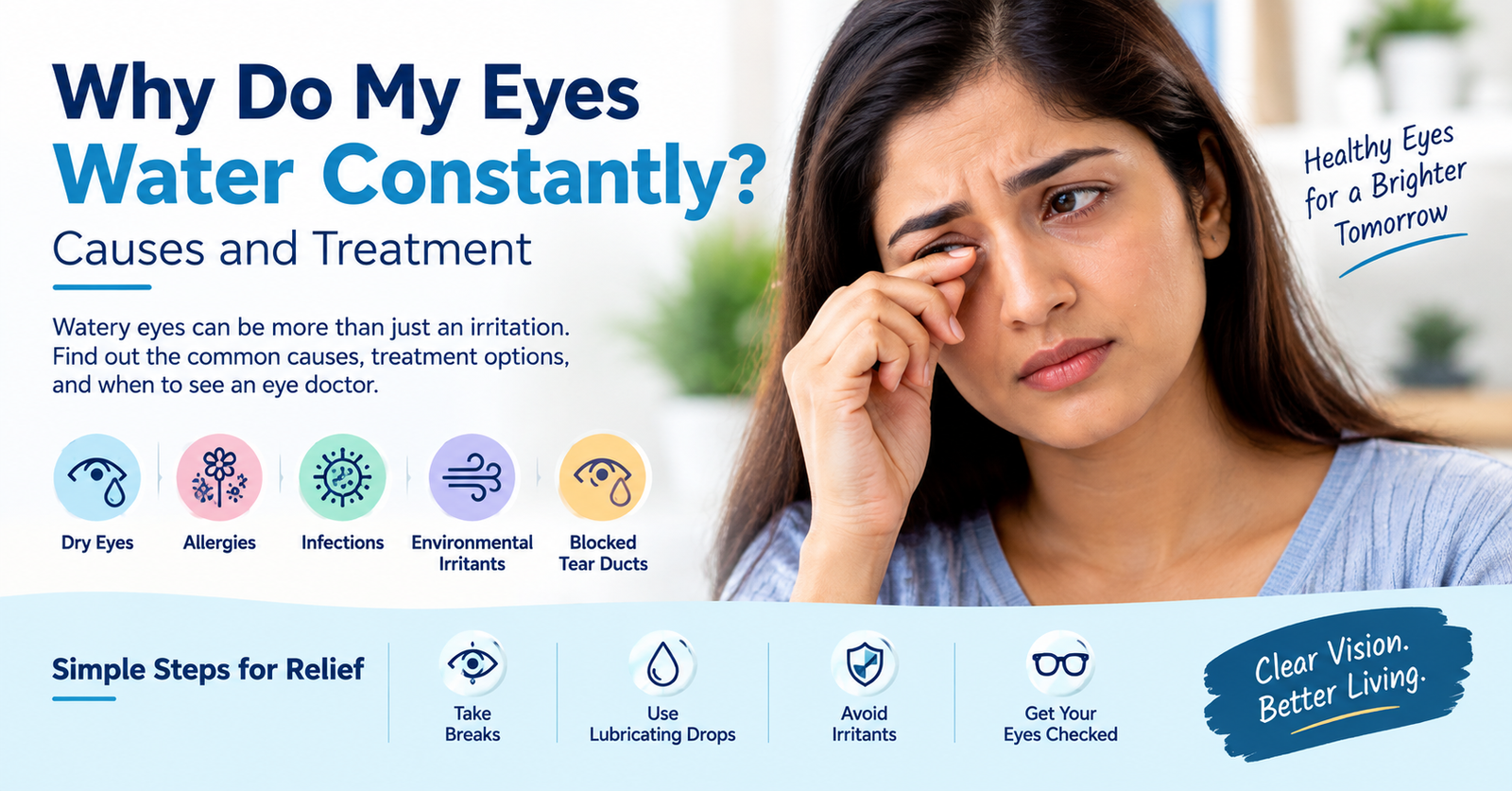
Although tears are essential for keeping your eyes healthy, excessive watering can sometimes indicate an underlying eye problem. Common causes include dry eyes, allergies, infections, blocked tear ducts, and environmental irritants.
Understanding why your eyes water constantly can help you identify possible triggers and determine when you should consult an eye specialist.
What Causes Constantly Watery Eyes?
Your eyes continuously produce tears to keep the surface moist, remove small particles, and protect against irritation. Normally, excess tears drain through tiny openings in the corners of your eyelids.
When your eyes produce too many tears or the drainage system does not work properly, watering can occur.
Here are some common causes.
1. Dry Eye Syndrome
It may sound surprising, but dry eyes are one of the common causes of watery eyes.
When the surface of your eye becomes dry or irritated, your body may produce extra reflex tears. However, these tears may not provide the right balance of moisture needed to keep your eyes comfortable.
Common symptoms include:
- Burning or stinging sensations
- A gritty feeling in the eyes
- Redness and irritation
- Blurred vision that comes and goes
- Excessive watering, particularly while reading or using screens
Dry eyes may be associated with prolonged screen use, aging, certain medications, or environmental conditions.
2. Eye Allergies
Allergic reactions can cause excessive tearing when your eyes come into contact with allergens such as dust, pollen, pet dander, or mold.
Allergy-related watering often occurs alongside:
- Itchy eyes
- Redness
- Swollen eyelids
- Sneezing or a runny nose
Rubbing your eyes can make irritation worse. Avoid rubbing them and consult an eye specialist if symptoms persist.
3. Eye Infections
Certain eye infections, including conjunctivitis, can cause watery eyes.
Depending on the cause, you may also experience redness, irritation, discharge, or swollen eyelids. Viral conjunctivitis often causes watery discharge, while bacterial conjunctivitis may produce thicker discharge.
If you have significant redness, pain, light sensitivity, or changes in vision, seek prompt medical attention rather than treating the problem yourself.
4. Environmental Irritants
Wind, dust, smoke, air pollution, and strong fumes can irritate the surface of your eyes and trigger excessive tear production.
You may notice watering when travelling outdoors, cleaning dusty areas, or spending time in smoky environments.
Protecting your eyes from irritants and avoiding direct exposure to smoke or dust may help reduce symptoms.
5. Blocked Tear Ducts
Tears normally drain through small channels near the inner corners of your eyelids into the nose. If these channels become blocked or narrowed, tears may overflow onto your cheeks.
Possible signs include:
- Persistent watering, sometimes in one eye
- Tears collecting near the inner corner
- Recurrent eye discharge
- Swelling or discomfort near the nose-side corner of the eye
A blocked tear duct may require medical evaluation and specific treatment, depending on its cause.
6. Eyelid Problems and Eyelashes
The eyelids help spread tears evenly across the surface of your eyes and guide excess tears into the drainage system.
If your eyelids turn inward or outward, or if eyelashes rub against the eye, irritation and watering can occur.
These conditions may require treatment by an eye specialist to protect the surface of the eye and relieve discomfort.
Why Do My Eyes Water When Using a Mobile Phone or Computer?
Prolonged screen use can contribute to dry eye symptoms because people tend to blink less frequently when concentrating on digital devices.
Reduced blinking can allow tears to evaporate more quickly, irritating the eye’s surface and triggering reflex tearing.
To reduce screen-related discomfort:
- Follow the 20-20-20 rule: every 20 minutes, look at something about 20 feet away for at least 20 seconds.
- Take regular breaks from screens.
- Remember to blink fully and regularly.
- Avoid direct airflow from fans or air conditioners toward your eyes.
- Ask an eye specialist whether lubricating eye drops may help.
If your eyes continue watering despite these measures, a comprehensive eye examination can help identify the cause.
How Can Constantly Watery Eyes Be Treated?
Treatment depends on the underlying cause. There is no single remedy that works for every case of watery eyes.
Your eye doctor may recommend:
Lubricating eye drops: Artificial tears may help relieve dryness and irritation that trigger excessive tearing.
Allergy treatment: If allergies are responsible, your doctor may recommend suitable allergy medication or eye drops.
Treatment for infection: Some infections require specific treatment, depending on their cause. Antibiotics are not effective against viral infections.
Tear duct treatment: A blocked tear duct may require further assessment and, in some cases, a procedure to restore drainage.
Eyelid treatment: Problems involving eyelid position or eyelashes may need specialist care.
Avoid using leftover prescription eye drops or self-medicating, particularly with steroid-containing drops, without medical advice.
When Should You See an Eye Doctor?
Occasional watering caused by wind or temporary irritation may settle on its own. However, persistent or recurring symptoms should be evaluated.
Arrange an eye examination if:
- Your eyes water constantly or interfere with daily activities.
- The problem affects only one eye and does not improve.
- You experience repeated redness or discharge.
- You have persistent irritation or eyelid swelling.
- Your vision becomes intermittently blurred.
Seek urgent medical attention if watery eyes occur with severe eye pain, significant light sensitivity, sudden changes in vision, an eye injury, or marked redness.
An eye specialist can examine your eye surface, eyelids, tear production, and drainage system to identify the underlying cause and recommend appropriate treatment.
How to Prevent Excessive Eye Watering
Although not every cause can be prevented, these simple habits may help maintain eye comfort:
- Avoid rubbing your eyes.
- Wash your hands before touching the area around your eyes.
- Reduce exposure to dust, smoke, and other irritants.
- Wear protective eyewear in dusty or windy environments.
- Take breaks during prolonged screen use.
- Maintain good eyelid hygiene as advised by your eye doctor.
- Attend regular eye examinations, especially if you have recurring symptoms.
Conclusion
If you have been wondering, “Why do my eyes water constantly?”, the answer may be dry eyes, allergies, environmental irritation, an infection, a blocked tear duct, or an eyelid problem.
While occasional watering is often harmless, persistent symptoms should not be ignored. Identifying the underlying cause is the best way to receive appropriate treatment and protect your eye health.
If excessive watering continues or is accompanied by pain, redness, or changes in vision, consult an eye specialist for a comprehensive evaluation.