Introduction
Have you ever experienced a headache after spending several hours looking at a computer, smartphone, or television screen? You may be wondering whether headaches and eye strains are connected.
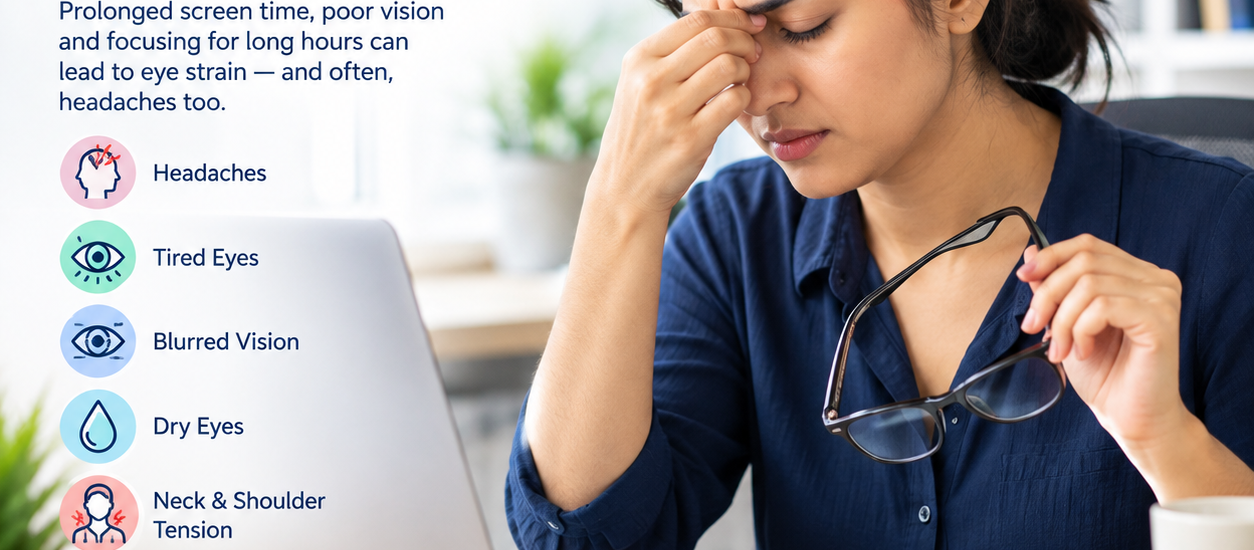
The answer is yes. Prolonged visual tasks can cause eye strain, which may be accompanied by headaches, tired eyes, blurred vision, dryness, or difficulty focusing. While occasional symptoms are usually temporary, frequent headaches or persistent eye discomfort should not be ignored.
Understanding the connection between headaches and eye strain can help you identify possible triggers and know when it is time to get your eyes checked.
What Is Eye Strain?
Eye strain, sometimes called digital eye strain when associated with prolonged screen use, occurs when your eyes become tired after extended visual activities.
Common activities that can contribute to eye strain include:
- Working on a computer for long periods
- Using smartphones or tablets
- Reading for several hours
- Driving for long distances
- Working in poor lighting
- Focusing on small print
- Performing detailed close-up work
Eye strain is generally not a serious condition, but repeated discomfort may affect your productivity and quality of life.
How Can Eye Strain Cause Headaches?
When you concentrate on a nearby object for a long time, the muscles involved in focusing your eyes remain active. Your eyes may also blink less frequently when you concentrate on a screen.
This can contribute to visual fatigue and discomfort. For some people, the discomfort may be experienced as a headache, particularly around the forehead, temples, or behind the eyes.
A headache associated with eye strain may occur after prolonged reading, computer work, or screen use and may improve after resting your eyes.
Common Symptoms of Eye Strain
Headaches are only one possible symptom. Eye strain may also cause:
- Tired or sore eyes
- Dry or watery eyes
- Blurred or fluctuating vision
- Difficulty focusing
- Increased sensitivity to light
- Burning or irritated eyes
- Feeling that your eyes are heavy
- Neck or shoulder discomfort
If these symptoms regularly occur after screen use or other visually demanding activities, eye strain could be contributing to the problem.
Can Poor Vision Cause Headaches?
Yes, certain uncorrected or under-corrected vision problems can contribute to headaches and eye discomfort.
For example, people with an uncorrected refractive error may have to work harder to see clearly. This can be particularly noticeable during reading, computer work, or other close-up activities.
Vision problems that may contribute to visual discomfort include:
Nearsightedness
Nearsighted people may have difficulty seeing distant objects clearly. Squinting or constantly trying to improve focus can contribute to eye fatigue.
Farsightedness
Farsightedness can make close-up activities more demanding, particularly during prolonged reading or computer work.
Astigmatism
Astigmatism can cause blurred or distorted vision at different distances and may be associated with visual discomfort.
Presbyopia
Presbyopia is an age-related change in the eye’s ability to focus on nearby objects. It commonly becomes noticeable after the age of 40 and can make reading and screen use more tiring.
If headaches occur frequently while performing visual tasks, a comprehensive eye examination can help determine whether an uncorrected vision problem is contributing to the symptoms.
Screen Time and Eye Strain
Digital devices are an important part of modern work, education, and communication. However, prolonged screen use can increase the risk of digital eye strain.
One reason is that people tend to blink less often while concentrating on a screen. Reduced blinking can contribute to dryness and irritation.
Screen-related discomfort may also be affected by:
- Long periods without breaks
- Glare or reflections on the screen
- Incorrect screen distance
- Poor lighting
- Small text
- Incorrect viewing posture
- Excessive screen brightness
The goal is not necessarily to avoid screens completely but to develop healthier screen habits.
How to Reduce Eye Strain and Headaches
Follow the 20-20-20 Rule
During prolonged screen use, try the 20-20-20 rule: every 20 minutes, look at something about 20 feet away for at least 20 seconds.
This gives your eyes a regular opportunity to relax from prolonged near focusing.
Take Regular Breaks
Avoid working continuously for several hours without looking away from your screen. Short, frequent breaks can help reduce visual fatigue.
Adjust Your Screen
Keep your monitor at a comfortable distance and position it so you do not need to constantly look up or down. Adjust the text size and brightness to a comfortable level.
Reduce Glare
Position your screen to minimize reflections from windows and overhead lighting. An anti-glare screen or appropriate workplace setup may also help.
Remember to Blink
Consciously blinking more frequently while using digital devices can help maintain the tear film over the surface of your eyes.
Maintain Good Lighting
Avoid using a bright screen in a completely dark room. Comfortable, balanced lighting can make prolonged visual tasks easier.
Check Your Vision
If you have not had an eye examination recently, consider scheduling one—especially if headaches or eye strain occur frequently.
When Should You See an Eye Doctor?
Occasional eye strain after a long day may improve with rest. However, frequent or persistent symptoms deserve professional evaluation.
Consider seeing an eye doctor if you experience:
- Frequent headaches associated with visual tasks
- Persistent blurred vision
- Difficulty focusing
- Eye pain
- Double vision
- Persistent redness or irritation
- Increasing sensitivity to light
- Symptoms that do not improve with rest
A comprehensive eye examination can determine whether a refractive error, dry eye, focusing problem, or another eye condition may be contributing to your symptoms.
Are All Headaches Caused by Eye Problems?
No. Headaches can have many different causes, including stress, dehydration, lack of sleep, migraine, sinus problems, and other medical conditions.
Therefore, it is important not to assume that every headache is caused by eye strain.
If you experience a sudden, severe headache, significant vision loss, double vision, weakness, confusion, or other unusual symptoms, seek urgent medical attention.
Conclusion
The connection between headaches and eye strain is important to understand, particularly in today’s screen-focused lifestyle. Prolonged computer use, reading, uncorrected vision problems, and dry eyes can all contribute to visual discomfort and, in some people, headaches.
Simple habits such as taking regular screen breaks, following the 20-20-20 rule, reducing glare, maintaining comfortable lighting, and getting regular eye examinations can help protect your visual comfort.
If headaches and eye strain occur frequently or interfere with your daily activities, don’t simply ignore them. A comprehensive eye examination can help identify whether an eye-related issue is contributing to your symptoms and determine the appropriate next step.