Introduction
Diabetes affects more than just blood sugar levels. It can also have a significant impact on your eyesight and overall eye health. Many people with diabetes experience vision changes without realizing that high blood sugar may be affecting their eyes.
One of the biggest concerns is diabetic retinopathy, an eye condition that can damage the blood vessels in the retina and potentially lead to permanent vision loss if left untreated.
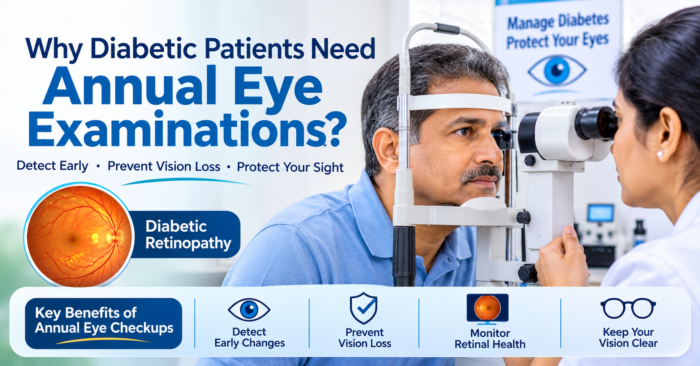
This is why annual eye examinations for diabetic patients are extremely important. Regular eye checkups help detect early signs of damage, even before noticeable symptoms develop. In this blog, let’s understand why diabetic patients should never skip their yearly eye examinations.
How Does Diabetes Affect Your Eyes?
Diabetes can damage small blood vessels throughout the body, including those inside the retina. The retina is the light-sensitive layer at the back of your eye that helps you see.
When blood sugar levels remain high over time, these blood vessels may become weak, leak fluid, or become blocked. This can affect normal vision and lead to several eye conditions.
Some common diabetes-related eye problems include:
- Diabetic retinopathy
- Diabetic macular edema
- Cataracts
- Glaucoma
Early detection and appropriate treatment can help reduce the risk of serious vision complications.
1. Early Detection of Diabetic Retinopathy
Diabetic retinopathy is one of the most common eye complications associated with diabetes.
It occurs when high blood sugar damages the blood vessels in the retina. In its early stages, it may not cause noticeable symptoms, which makes regular eye examinations particularly important.
As the condition progresses, symptoms may include:
- Blurred vision
- Dark spots or floaters
- Difficulty seeing at night
- Fluctuating vision
- Sudden vision loss in advanced cases
A comprehensive dilated eye examination can help identify retinal changes before significant vision problems develop.
Early detection allows your eye specialist to recommend appropriate monitoring or treatment.
2. Preventing Diabetes-Related Vision Loss
One of the main reasons diabetic patients need regular eye examinations is to reduce the risk of preventable vision loss.
Diabetic retinopathy can progress silently. By the time noticeable symptoms appear, the condition may already be advanced.
Depending on the severity, treatment options may include:
- Anti-VEGF injections
- Laser treatment
- Vitrectomy surgery
Not every patient requires these treatments. The appropriate approach depends on the condition of the retina and the extent of damage.
Regular examinations help doctors identify when intervention may be necessary.
3. Detecting Diabetic Macular Edema
Diabetic macular edema is another complication that can affect people with diabetes.
The macula is the central part of the retina responsible for detailed vision, including reading, recognizing faces, and seeing fine details.
When damaged blood vessels leak fluid into the macula, swelling can occur. This may result in:
- Blurred central vision
- Difficulty reading
- Distorted vision
- Difficulty recognizing faces
An eye specialist may use retinal imaging and Optical Coherence Tomography (OCT) to identify swelling and assess the condition.
Early diagnosis and treatment can help protect central vision.
4. Identifying Cataracts and Glaucoma Early
People with diabetes have an increased risk of developing certain eye conditions.
Cataracts: Diabetes can increase the risk of developing cataracts at a younger age. Cataracts cause the natural lens of the eye to become cloudy, resulting in blurred vision, glare, and difficulty seeing clearly.
Glaucoma: People with diabetes may have an increased risk of developing glaucoma. This condition damages the optic nerve, often due to increased eye pressure or other factors. It may progress without noticeable symptoms during its early stages.
Regular eye examinations help detect these conditions and allow timely treatment.
5. Eye Damage Can Occur Without Warning Signs
One common misconception is that diabetic patients only need an eye examination when their vision becomes blurry.
Unfortunately, this is not true.
Many diabetes-related eye conditions develop gradually without causing pain or obvious changes in vision.
You may continue seeing clearly even when early retinal damage is already present.
An annual comprehensive eye examination can help identify these hidden problems before they become serious.
6. What Happens During a Diabetic Eye Examination?
A diabetic eye examination involves several tests to evaluate your vision and eye health.
Depending on your condition, your eye specialist may recommend:
Visual Acuity Test: Checks how clearly you can see at different distances.
Dilated Eye Examination: Eye drops are used to widen the pupils so the doctor can examine the retina and optic nerve.
Retinal Photography: Captures images of the retina to identify abnormalities and monitor changes over time.
Optical Coherence Tomography (OCT): Produces detailed images of retinal layers and helps detect macular swelling.
Eye Pressure Test: Measures the pressure inside your eyes to help assess glaucoma risk.
These examinations help your doctor understand your eye health and recommend appropriate care.
7. How Often Should Diabetic Patients Get Eye Examinations?
The frequency of eye examinations depends on the type of diabetes, existing retinal damage, and individual risk factors.
General recommendations include:
- Type 1 diabetes: A comprehensive dilated eye examination within five years of diagnosis, followed by regular examinations.
- Type 2 diabetes: An eye examination at the time of diagnosis because the condition may have been present for some time.
- Pregnancy with pre-existing diabetes: Eye examinations before pregnancy or during the first trimester, with further monitoring as recommended by the eye specialist.
For many diabetic patients, annual examinations are recommended. However, patients with no evidence of retinopathy and consistently good blood sugar control may sometimes be advised to attend less frequently.
Those with existing diabetic retinopathy may need more frequent follow-ups.
Always follow your eye specialist’s recommended examination schedule.
8. Tips to Protect Your Eyes If You Have Diabetes
Along with regular eye examinations, maintaining good diabetes management is essential for protecting your eyesight.
Here are some important habits:
- Monitor your blood sugar levels regularly.
- Maintain healthy blood pressure and cholesterol levels.
- Follow your prescribed diabetes medication.
- Eat a balanced diet with plenty of vegetables and nutritious foods.
- Stay physically active.
- Avoid smoking.
- Attend all recommended eye appointments.
Good diabetes management can help reduce the risk of developing or worsening diabetes-related eye complications.
Conclusion
Diabetes can affect your eyesight even before you notice any vision problems. Conditions such as diabetic retinopathy, macular edema, cataracts, and glaucoma can develop gradually and may lead to serious complications if left undetected.
That is why annual eye examinations for diabetic patients are essential. Regular checkups help identify early signs of eye damage, monitor existing conditions, and ensure timely treatment when needed.
If you have diabetes, don’t wait for blurred vision or other symptoms before visiting an eye specialist. Make a comprehensive eye examination an important part of your diabetes care routine. Protecting your blood sugar is important, but protecting your eyesight is equally essential.